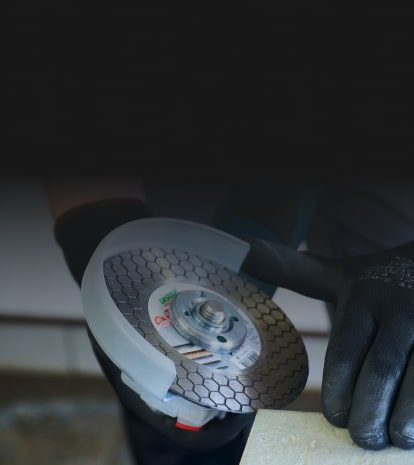
Diamond blades for porcelain tile
87 models


Sort:

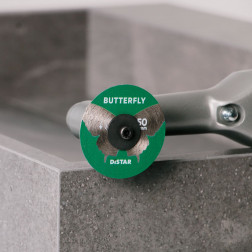
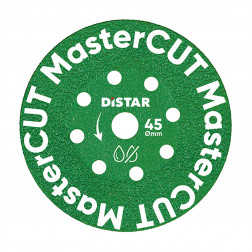
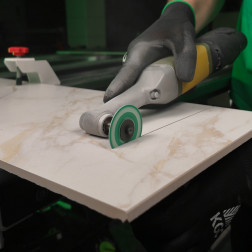

NEW
NEW
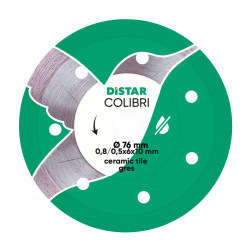
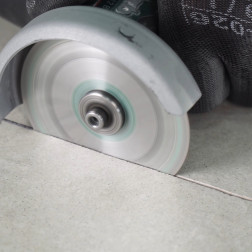
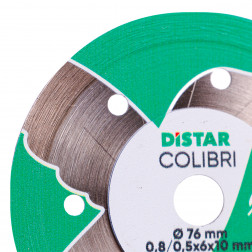
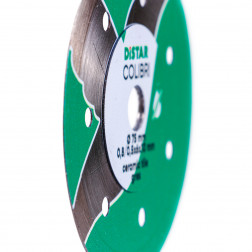
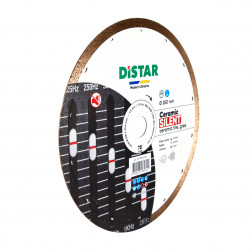




TOP
TOP
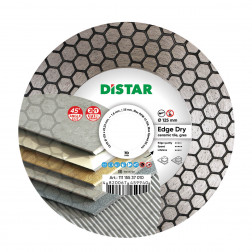
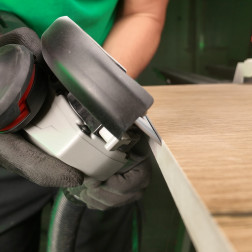
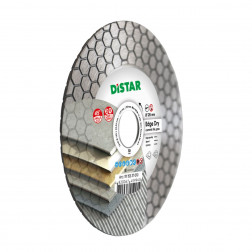
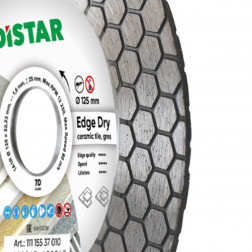
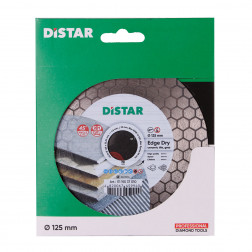
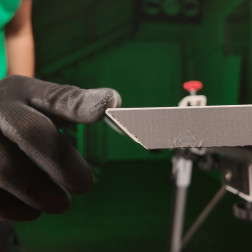
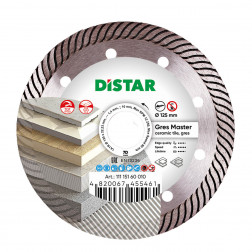
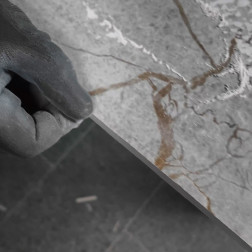
When cutting porcelain stoneware, craftsmen face many different questions: is it better to cut in dry mode or with water supply, which diamond blade is best for finishing cuts, how to choose the right cutting equipment? This is far from an exhaustive list of questions, the answers to which can be found in this article.
Types of blades for cutting porcelain stoneware
You have certainly noticed that there are many different blades on store shelves. One of their important differences is the diamond layer. It can be of three types, however, only continuous rim and turbo blades are used for cutting porcelain tiles.
Continuous rim blade
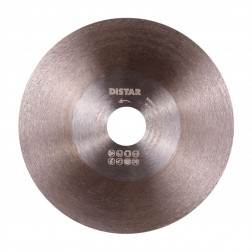
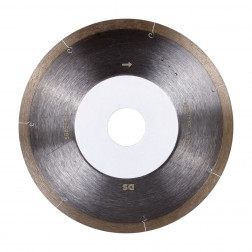
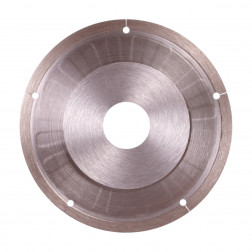
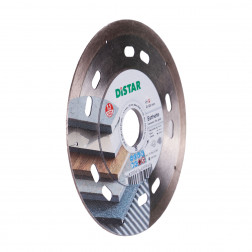
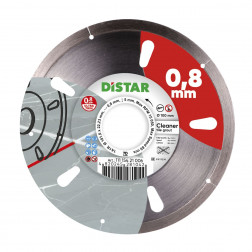
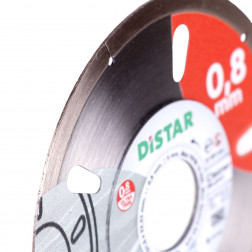
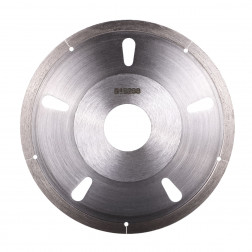
A porcelain stoneware blade with a uniform diamond layer without gaps or recesses is called a continuous rim blade. Thanks to such a smooth layer, it is possible to achieve the cleanest cut without chips on the surface of porcelain stoneware. Very often, synthetic diamonds of a fine grit are used in such blades. This makes it possible to minimize chipping on the tile during the cutting process as much as possible.
Turbo blade
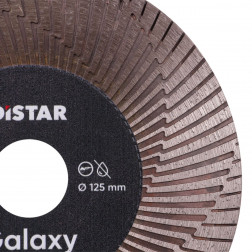
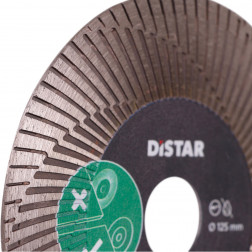
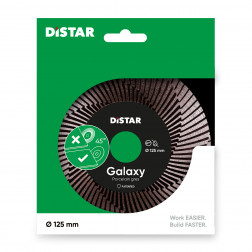
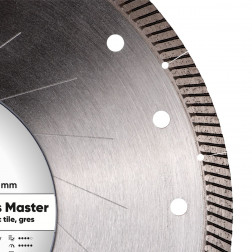
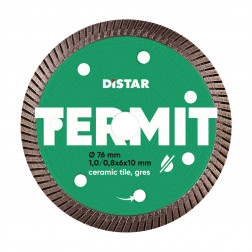
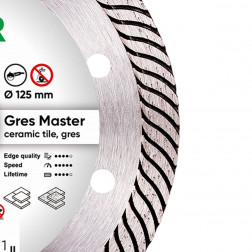
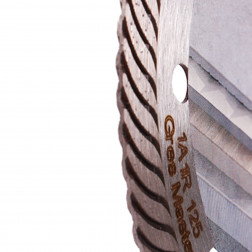
Such diamond blades for porcelain stoneware are also called corrugated because their diamond layer is made with recesses and protrusions that resemble a corrugated product. Thanks to this design of the diamond layer, the blade of the turbo type can handle the strongest or thickened porcelain stoneware, because the corrugation increases the processing speed of the material and improves cooling of our blade for cutting porcelain stoneware.
Dry or wet cutting, what to choose?
Tile installation мастери often discuss the differences between dry and wet cutting and the preferred method. We suggest studying the features and advantages of each of them.
Dry tile processing
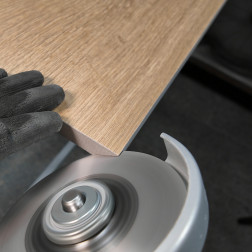
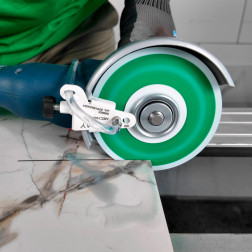
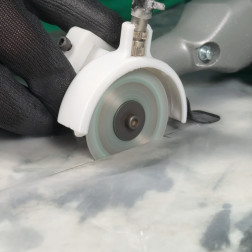
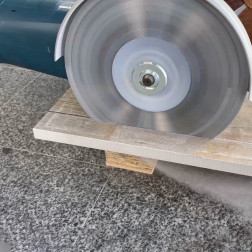
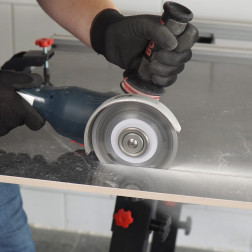
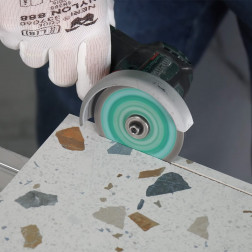
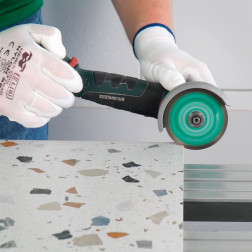
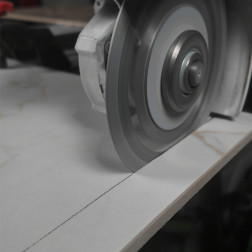
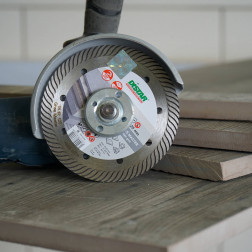
For dry cutting of porcelain stoneware, in 99% of cases angle grinders and porcelain stoneware blades 125 mm are used. For some tilers, dry cutting is associated with increased chipping, but manufacturers of blades for cutting porcelain stoneware constantly fight this myth. They improve diamond blades for porcelain stoneware, which today makes it possible to cut tiles on an angle grinder with chipping that is practically no worse than wet cutting on a tile cutter. So what are the main advantages of using an angle grinder?
- Low price of the blade
- Ability to make curved cuts
- Cutting long workpieces
- Availability of electric equipment
Wet tile cutting
Processing porcelain stoneware using cooling liquid is carried out on special tile cutters using a blade for cutting porcelain stoneware 125, 200 and 250 mm. Mainly, craftsmen use 200 and 250 mm tile cutters, because models for porcelain stoneware blades 125 have started appearing on the market relatively recently. So what advantages do tile cutters have?
- Excellent cut cleanliness
- Straightness of the cut
- No dust during porcelain stoneware processing
- Ergonomic table
As you can see, both the tile cutter and the angle grinder have many advantages, so it is difficult to say unequivocally that one type of this electric equipment is a clear favorite. Ideally, it would be best to have both of these tools and use them depending on the assigned tasks.
How to correctly choose a blade for cutting porcelain stoneware
When cutting porcelain stoneware, there are 3 main tasks, depending on which you should choose a porcelain stoneware blade.
Rough cutting
This type of porcelain stoneware cutting includes cuts of tiles that will be hidden from the human eye, for example by various decorative elements – trims and corners. In this case, a cheap blade for cutting porcelain stoneware is enough, and there is no need to strive to make a perfectly even cut without chips.
Finishing cut
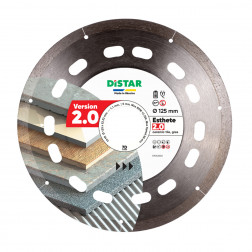
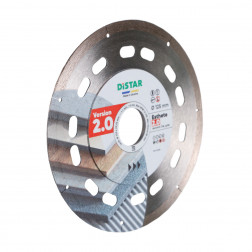
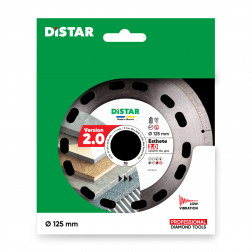
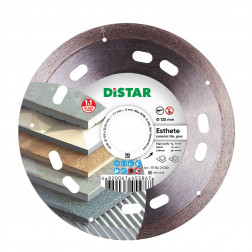
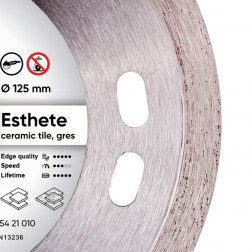
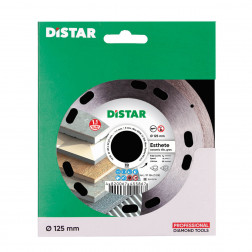
Finishing cut is used on visible elements that will be noticeable. For such cuts, it is better to use a more expensive and professional blade for cutting porcelain stoneware, for example Esthete or Perfect for dry cutting or Edge, Hard Ceramics – for wet cutting.
Cutting at a 45-degree angle
Cutting porcelain tiles at a 45-degree angle is required when we create outer corners from them. With such cutting, the blade will be heavily loaded, so it is better to use thickened specialized blades – Edge Dry for the angle grinder or Edge for the tile cutter.
Advantages of purchasing blades from Distar
The Distar brand has long established itself as a leading manufacturer in the processing of ceramics and porcelain stoneware. What are the main advantages of this company?
- Total product quality control
- Own production and testing laboratory
- Online and offline stores
- Possibility of delivery to any city
- Consideration of claims regarding product quality
- Availability of unique Mechanic attachments for tile processing
When developing its products, Distar tries to look at the matter through the eyes of a tiler in order to best understand all the specifics of this profession and provide simple solutions to even the most difficult problems.
Frequently Asked Questions
Which Distar porcelain stoneware blades are the most popular?
For processing porcelain stoneware, craftsmen prefer to use the following blade models:
- Esthete and Perfect – for dry finishing
- Edge and Hard Ceramics – for wet finishing
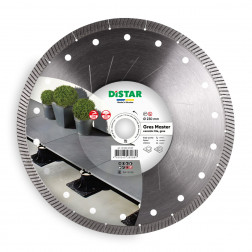
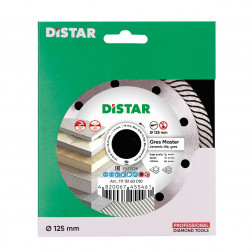
- Gres Master – for dry cutting of strong and thickened tiles
- Hard Ceramics Advanced – for wet cutting of strong and thickened tiles
- Edge Dry – dry cutting at a 45-degree angle
- Edge – wet cutting at a 45-degree angle
What factors should be taken into account when choosing a blade for different types of equipment?
When choosing a blade for cutting porcelain stoneware, it is important to pay attention to the blade diameter, the material being processed, the mounting hole, and the maximum rotational speed of the power tool.
How often should a diamond blade be replaced?
The main sign of wear is that the diamond layer has almost worn down to the metal body. If a 5-7 mm layer remains and the blade stops cutting, it should be sharpened on an abrasive bar or materials such as ceramic tiles or sand-lime brick.