Granite hole saws
39 models


Sort:
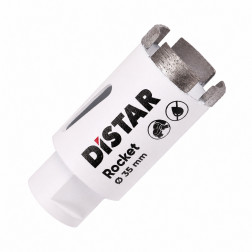
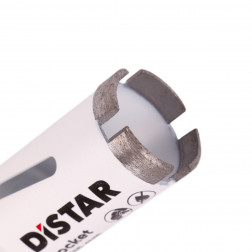
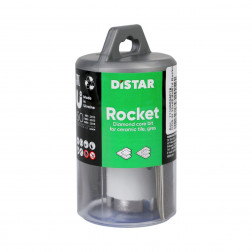
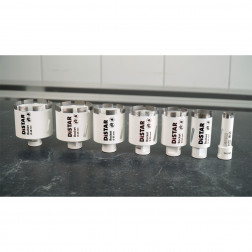
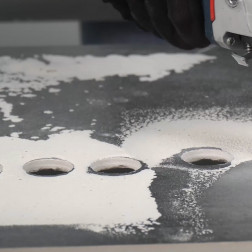
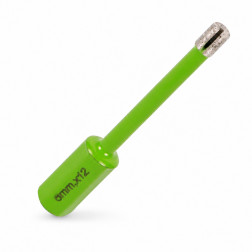

Natural stone such as granite is very often used in modern interiors or outdoors. It has gained popularity thanks to a number of technical properties – resistance to moisture and temperature changes, high strength, and above all its aesthetic appearance. Although granite is a very hard rock, it is also quite brittle, which is why processing it requires a careful approach. Drilling granite is a fairly common operation, and the best tool for the job is diamond drill bits. In many applications, a diamond crown bit for granite also works well, providing maximum precision.
Advantages of Using Diamond Core Bits for Granite
Although granite is very durable, the synthetic diamonds used in diamond core bits for granite are significantly harder, which is why they are able to grind granite into dust, creating holes in it. Using diamond drill bits for granite processing offers a number of advantages:
- High hole precision
- Minimal chipping
- Ability to drill either with water supply or without it (depending on the bit type)
- Can be used on various types of equipment (angle grinder, hammer drill, drill, and screwdriver)
- High material processing speed
- Minimal noise and dust
Thanks to these features, diamond crown bits for granite are the leader in granite processing. During intensive work, diamond core bits for granite, which offer greater performance and durability, are also increasingly used.
Types of Diamond Core Bits for Granite
Crown bits for granite differ based on a few basic parameters – hole diameter and drilling type (dry or wet). As for diameter – we need a hole of a certain size, so we buy a crown bit of that diameter. As for cooling of the crown bit, it's worth spending a bit more time on this topic.
Dry Core Bits for Granite
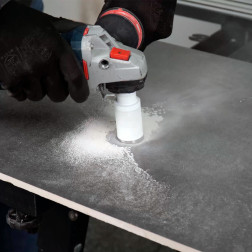
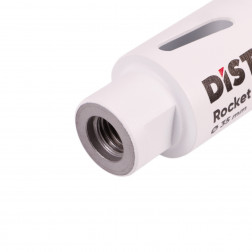
All crown bits designed for dry granite drilling are segmented. This is because segmented diamond tools have much better cooling than tools with a continuous edge. In this category, segmented-version core bits for granite are also often used, ideal for fast work without cooling. Crown drill bits for granite used dry are mounted on angle grinders. Depending on the crown bit's diameter, the spindle rotation speed of the grinder must be selected accordingly. This means that an angle grinder with speed control is needed for drilling granite. When working with diamond core bits for granite, always follow the manufacturer's recommendations regarding the bit's rotation speed; otherwise, you risk overheating and damaging the bit, or even the workpiece itself. Crown bits designed for dry drilling are equipped with an M14 thread, which matches the angle grinder's spindle thread.
Generally speaking, working with a granite core bit on angle grinders takes place at higher speeds than with other types of equipment, which is why dry drilling is faster.
Wet Diamond Drill Bits for Granite
Wet core bits for granite are used on hammer drills, drills, and screwdrivers. To be mounted on such equipment, they are fitted with an S10 or S12 shank, which is clamped in the tool's chuck. For hammer drills, SDS granite drill bits are also often used, guaranteeing stability and secure mounting during wet drilling. Drilling with such equipment takes place at low speeds, so the processing speed is significantly lower than with grinder drilling. Since the bit stays in constant contact with the material for a long time, water cooling is necessary. It's very important to supply a sufficient amount of cooling water so as not to damage the granite crown bit. Dry drilling with such crown bits is prohibited, as it leads to overheating and loss of the bit's cutting ability. The main advantage of such crown bits is the high quality of the hole edge.
For work with larger diameters, crown drill bits for granite are especially recommended, as they provide smooth and clean holes even in very hard varieties of stone.
How to Use Diamond Crown Bits for Granite?
On one hand, mounting a bit on equipment and making a hole seems like a trivial task, but in practice you may encounter certain problems. To help you avoid doing this task incorrectly, we've gathered useful tips to help you with granite drilling:
- Firmly secure the bit in the equipment to avoid slipping during work
- The workpiece should also be firmly secured and clearly marked
- The initial starting cut should not be made perpendicular to the tile, but at a 45-50 degree angle, gradually forming a groove and straightening the bit
- Once you've straightened the bit, you shouldn't drill continuously straight, but should move it side to side to better remove slurry from the hole
- Make sure water is continuously supplied to the cutting zone if you're drilling wet
- When working dry, don't make many holes one after another, to avoid overheating the diamond segments of your granite core bit
- If you notice that the drilling speed has significantly dropped, sharpen it on some abrasive material (fresh concrete, silicate brick, asphalt, or a special abrasive stone). To restore cutting ability, it's enough to make a few holes in the abrasive material
Which Brand of Granite Crown Bits Is Worth Trusting?
You've certainly noticed many different granite core bits on store shelves, from both reputable manufacturers and Chinese brands. One well-known brand in the diamond tools market is Distar, which for three decades has been manufacturing and continuously improving crown drill bits for granite. To achieve good results in granite processing, Distar's technologists use high-quality raw materials and continuously monitor the quality of every batch of products.
Distar's range also includes a diamond core bit for granite, designed for both wet and dry operation — depending on the series and diameter.
Besides high product quality, Distar stands out with a convenient website, which is a full-fledged online store and a guide to using the tools. Here you can find useful tips on working with granite core bits, interesting articles about diamond tools, videos of the tools in action, the location of physical stores, product prices, and of course, you can purchase diamond tools with delivery to any city! This convenient functionality attracts the attention of many construction industry professionals and makes Distar their number one choice.
Frequently Asked Questions
How does a diamond crown bit for granite differ from others?
Besides diamond crown bits, carbide crown bits are also often used for processing construction materials. Processing granite with such a tool is practically impossible, since the cutting edges of such a crown bit quickly become dull and are unable to effectively create holes. Diamond crown bits have edges that are significantly harder than granite, which is why they're able to make many holes in granite. The highest precision here is provided by the diamond crown bit for granite, especially when working with hard varieties of stone.
What is the lifespan of a diamond crown bit for granite?
The lifespan of a diamond core bit for granite depends on the diameter, the type of crown bit, and also on the type of granite being processed. Generally speaking, most granite drill bits are capable of making more than 100 holes in 20 mm thick granite. Models equipped with premium segments, including diamond core bits for granite, can achieve even higher results.
What is the main difference between wet and dry granite drilling?
Dry granite drilling is done at high speed, but this speed comes at the cost of noticeable chipping at the hole's edge. Wet processing is several times slower, but such holes are precise, with no visible chipping. For wet drilling, crown drill bits for granite are most often chosen, as they provide perfectly clean edges.