Core drills for Brick
37 models


Sort:
NEW
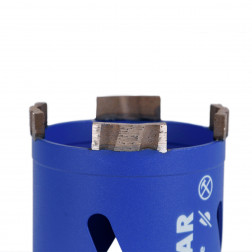
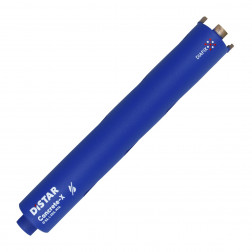
Brick
Concrete
Reinforced concrete
Highly reinforced concrete
68 - 82 mm
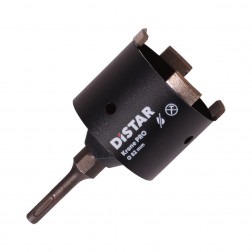
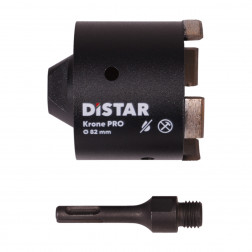
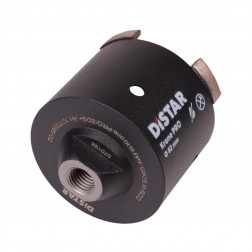
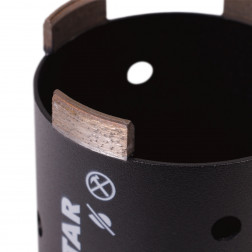
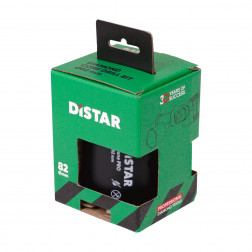
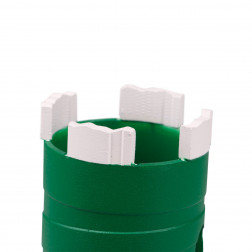
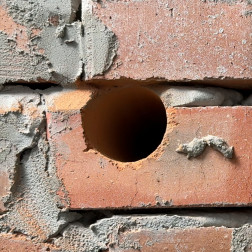
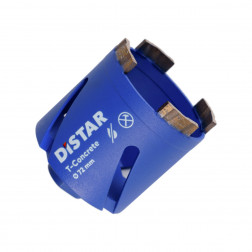
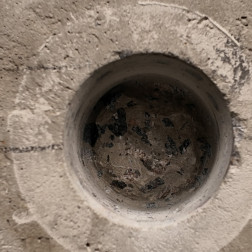
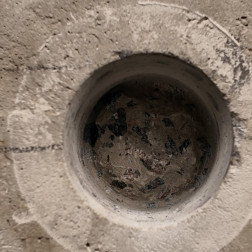
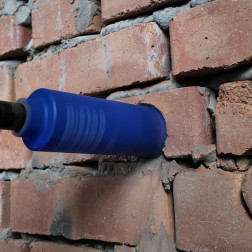
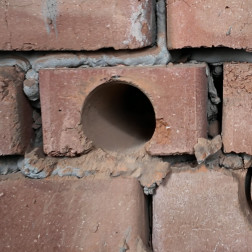
Drilling holes in walls or ceilings is a very common operation both at the building construction stage and in rooms with finished decor. One of the most common materials that needs to be drilled is brick. Drilling holes in brick is most often done using a diamond core drill, while carbide crowns take a back seat.
Advantages of diamond drilling
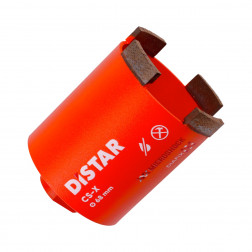
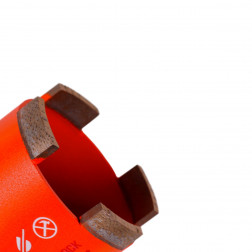
Drilling with a diamond core drill for brick has a number of advantages compared to carbide crowns:
- Wide range of compatible equipment
- High drilling speed
- Operation in impact-free mode (no load on the structure)
- Ability to make large and deep holes
- Minimization of construction waste after drilling
- Precise and even hole
All these advantages are gradually displacing carbide crowns and percussion drill bits from the construction market, since they practically have no advantage over diamond core drills for brick.
Sizes and purpose of diamond crowns for brick
When drilling holes in brick, a professional may encounter many different tasks that require drilling holes of a specific diameter and depth. Let's look at the most popular operations and the crown diameters for brick needed to perform them:
- Kitchen hood — 112-132 mm
- Industrial hood — 200-300 mm
- Gas pipes — 32-42 mm
- Sewage pipes — 112-132 mm
- Ventilation systems — 102-132 mm
- Heat recovery unit — 82-132 mm
- Air conditioner — 42-62 mm
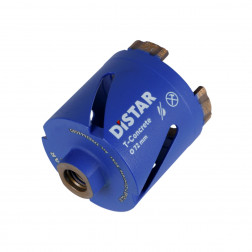
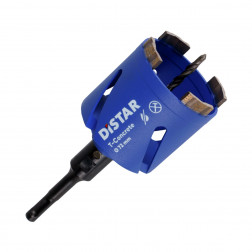
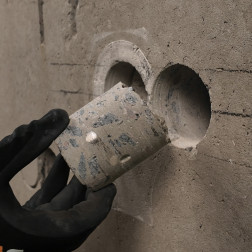
- Electrical outlets — 68-72 mm
- Distribution boxes — 82 mm
As for the diameter, everything is more or less clear; the depth of the hole depends on the thickness of the wall in which we are making the hole. Here we can be dealing with a thickness of either 150-200 mm or over 1000 mm. Diamond crowns are usually produced on a 300 and 450 mm body, but sometimes this length is not always enough to complete the task at hand. In such a case, special extensions are used. Only core drills for brick used for outlet holes have a fixed hole depth. The depth of such a bit is about 70 mm, which is enough for installing all kinds of outlets.
How to properly drill brick
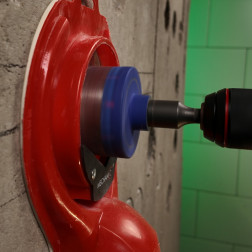
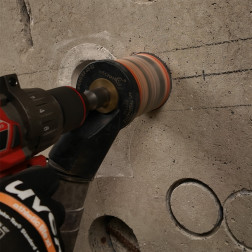
Brick is a fairly soft material that is easy to work with. Most professionals use dry-drilling core bits for brick to work with it. Some of these bits (for outlet boxes or air conditioner holes) can be used with an ordinary household impact drill, while others are used on special diamond drilling rigs. Regardless of the equipment, however, there are several practical tips that will help you when drilling brick:
- Mark out the future hole precisely
- Depending on the purpose of the hole, determine the drilling angle
- Make sure there are no wires either inside the wall itself or at the drill's exit point
- It is best to start drilling into the material using a special template or centering device
- If there is no template or centering device, you can start drilling without them, but in that case you should position the core drill for brick at a 45-degree angle to the material and gradually straighten it
- If you have drilled through to the full depth of the crown but it is not enough, remove the bit, remove the drilled-out brick (core), and mount an extension between the bit and the equipment's spindle
- If there is metal in the structure — do not increase pressure on the bit and, if possible, reduce the shaft's rotation speed
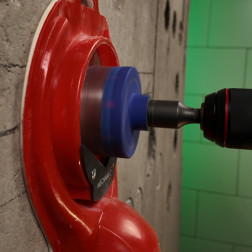
- When working with a core drill for brick in dry mode, try to use a vacuum cleaner to remove dust from the cutting zone, as this will allow you to work cleanly and also cool the diamond segments more effectively
As you gain experience drilling brick, all these tips will seem like axioms, but for a professional with little experience they will be very helpful when performing various jobs.
Where to buy diamond crowns for brick?
Buying diamond tools at the first construction store you come across is not the best idea, since in most cases they are stocked with cheap, low-quality Chinese tools. A much better solution is to find a good manufacturer of core drills for brick and consistently buy products from a single brand. One well-known brand of high-quality diamond tools is the company Distar. This company, as well as its products, have a number of huge advantages:
- High quality of diamond tools
- Technologically advanced production line
- Product deliveries to more than 50 countries around the world
- Presence across many social media platforms with content about tool performance
- Convenient website
- Fair product pricing
Distar's production uses the most modern equipment from renowned German, Korean, and Chinese brands. And all products manufactured using this equipment undergo uncompromising quality control across many parameters.
In addition to high-quality products, Distar offers a very convenient online resource where you can find a large amount of educational information, view product prices, and place an order with delivery to any city.
Frequently Asked Questions
Can diamond crowns be used to drill regular and hollow brick?
Diamond core drills for brick handle the processing of any type of brick equally well.
What is the service life of diamond crowns when drilling brick?
Brick is a very easy and simple material to work with, however many types of brick are very abrasive and wear down a diamond bit faster than strong concrete. Every diamond crown can handle at least a few linear meters of brick, and the most durable crowns — several dozen meters.
How to properly choose the diameter of a crown for brick?
The diameter of a core drill for brick depends entirely on the purpose of the given hole. Depending on what diameter the element intended for the hole has, that is the diameter that should be chosen for the crown. To make sure the element fits precisely into the hole, you can make the hole 5-10 mm larger.