Core drills for Perforator
8 models


Sort:
NEW
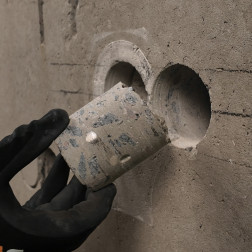
Brick
Concrete
Reinforced concrete
Highly reinforced concrete
68 - 82 mm
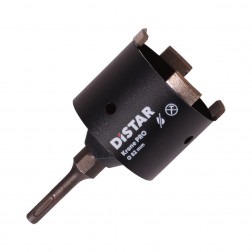
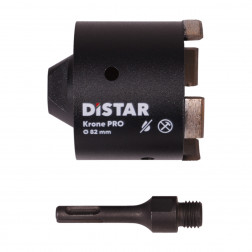
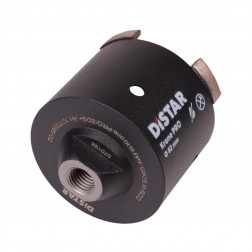
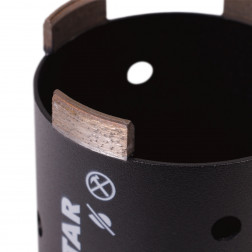
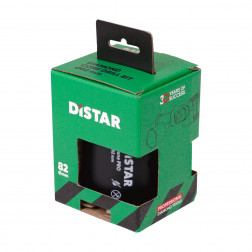
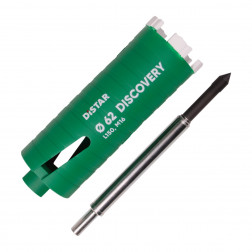
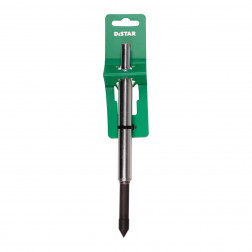
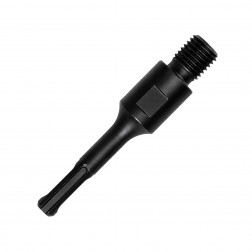
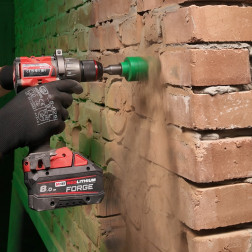
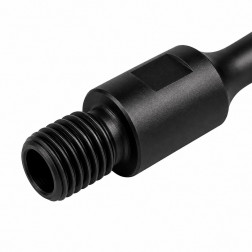
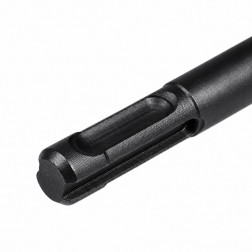
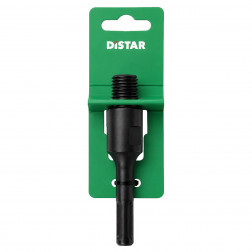
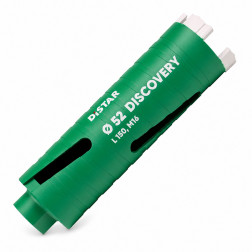
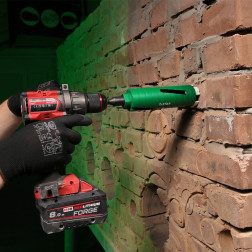
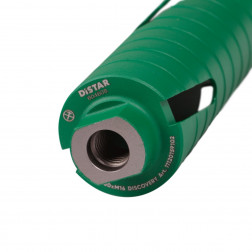
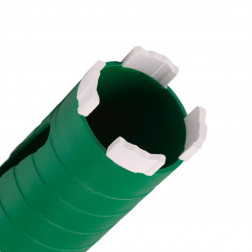
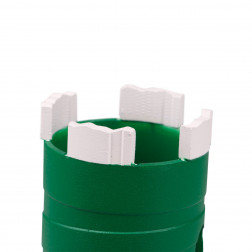
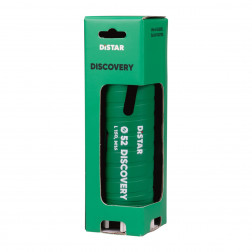
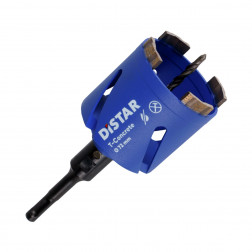
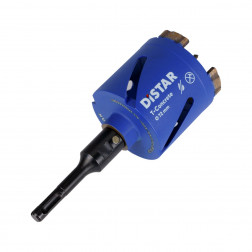
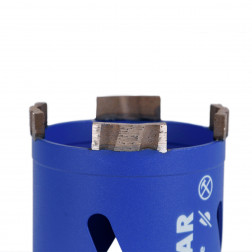
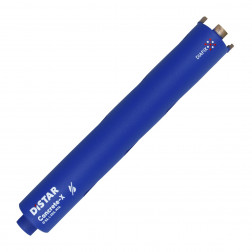
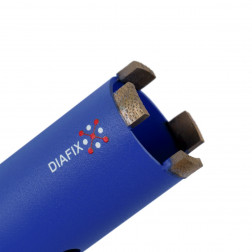
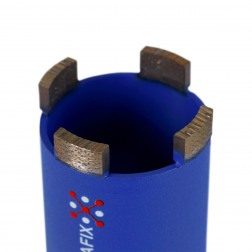
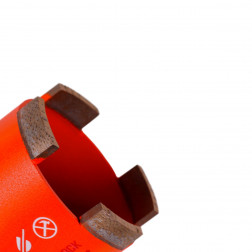
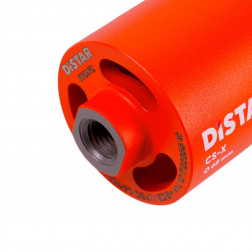
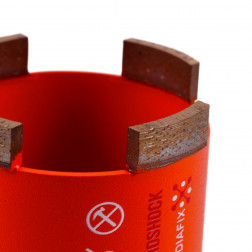
Diamond core bit for hammer drill
Concrete is one of the hardest and most difficult building materials to process. Very often on construction sites, craftsmen deal with drilling technological holes precisely in concrete.
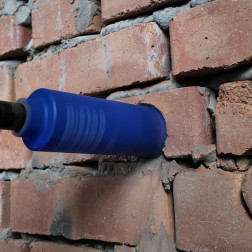
One of the most common tools for drilling small holes in concrete is a hammer drill. In addition to concrete, it easily handles other building materials such as brick, aerated concrete, foam block, and others. Diamond drill bits for hammer drills are used as consumables for drilling holes.
In the arsenal of almost every craftsman involved in repairs, there is a hammer drill, because it allows performing many construction operations: drilling socket holes, drilling holes for dowels, dismantling building materials, and much more. If you are going to use a hammer drill mainly for drilling, you should pay attention to the following parameters:
- Power. Since during drilling at many construction sites you may encounter concrete, and it is often very hard, it is better to have a more powerful tool in your arsenal. Household hammer drills have power up to 900 W, while more professional ones up to 1500 W. The more powerful the equipment, the longer it can operate continuously.
- Power type. For such work, choosing a cordless hammer drill is highly undesirable, because heavy load on the drive will quickly drain the battery. Corded equipment is the best solution for such tasks.
- Operating modes. Hammer drills can have 3 operating modes – drilling, hammer drilling, and chiseling without rotation. Drilling with diamond consumables is carried out exclusively in non-impact mode. However, since the power tool can be used for other purposes, it is better to have all 3 modes.
- RPM. A specific feature of hammer drills is that the higher the RPM, the lower the power. For drilling heavy building materials, it is very important that the hammer drill is powerful, so it is recommended to choose a model with a rotation speed of 800–1000 rpm and no more.
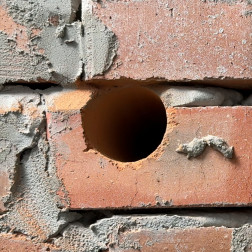
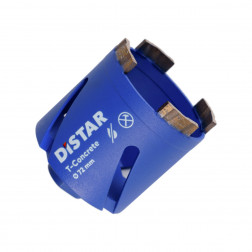
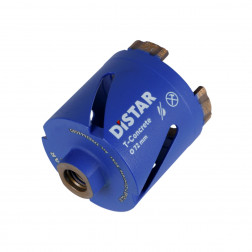
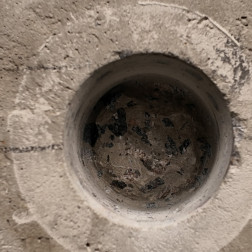
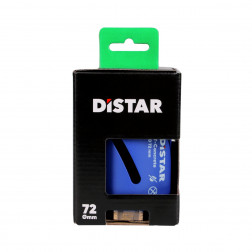
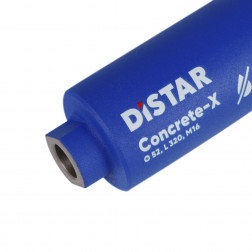
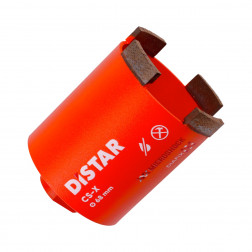
The most common operation when drilling building materials with a hammer drill is creating technological holes for sockets. For such purposes, the company "Distar" produces 3 diameters of drill bits
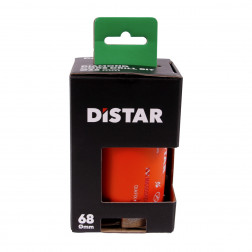
- 68 mm. Almost all standard household sockets without gaps fit into a technological hole of this diameter. It is important to mark the future hole very precisely when using such a drill bit.
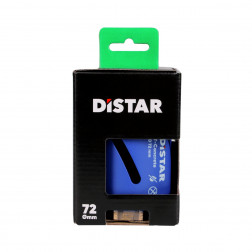
- 72 mm. When making such a hole, we can slightly adjust the position of the socket inside, which is very useful if the marking was slightly inaccurate.
- 82 mm. Such a drill bit is used for drilling holes for junction boxes.
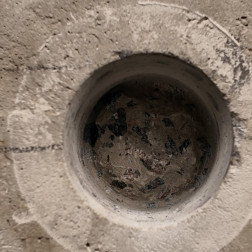
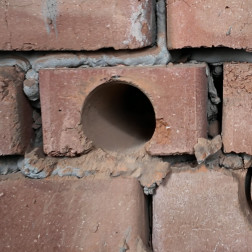
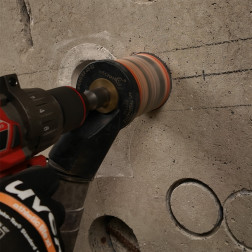
The process of drilling holes for sockets is considered preparatory work, because in the future such a hole will be hidden from the human eye and is performed exclusively in dry mode, without the use of cooling liquid. Conventionally, this process can be divided into several stages:
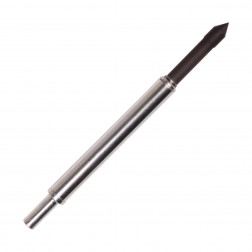
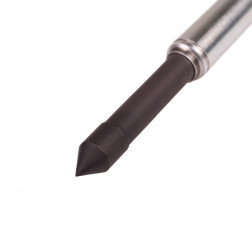
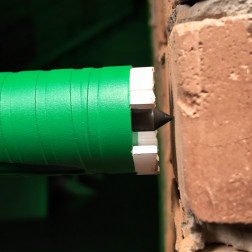
- Center drilling. Starting drilling in concrete or another building material is not so simple, because the drill bit can slip in different directions. To conveniently start drilling, a centering drill is used. A hole is drilled in the center of the future opening, usually with a diameter of 6 mm. Then the drill is inserted into the diamond consumable, which in turn is mounted into the hammer drill, and in non-impact mode a groove 6–10 mm deep is cut. After that, the centering drill is removed. This process is carried out thanks to a magnetic adapter developed by Distar.
- Drilling. The drilling process must be carried out in non-impact mode. To increase speed, it is necessary to make oscillating movements so that the drill deviates by 10–15 degrees from the axis. This improves dust removal and diamond sharpening processes, which positively affects processing speed. However, this process should not be overused, because strong deviation from the axis wears out the drill body.
- Core removal. After drilling the hole to full depth, the core must be removed. To do this, it is enough to loosen it with a chisel, and it will crack.
It is worth noting that in addition to working holes in concrete, brick, and other building materials, a hammer drill can also be used to make holes in finishing cladding materials. For drilling ceramics and porcelain stoneware using a hammer drill, TM "Baumesser" offers a line of diamond drill bits with diameters from 6 to 70 mm.
Work on drilling such material is also carried out in non-impact mode, but with the supply of cooling liquid; otherwise, the diamond consumable may overheat, which will lead to low service life or damage to the tile.
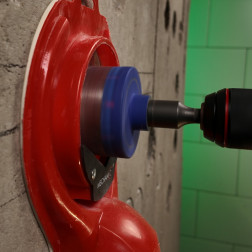
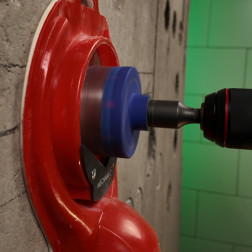
Drilling most building materials is accompanied by a large amount of dust, and to minimize it, you can use a special device from TM "Mechanic" – "DrillDuster 2.0”.
On our website, you can choose diamond consumables for a hammer drill both for rough work (on concrete, brick, and other materials) and for finishing drilling of tiles.