Diamond blades for Table saw 125
58 models


Sort:
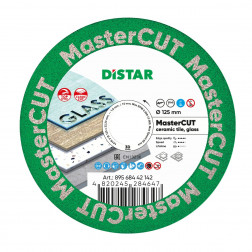
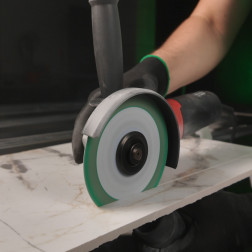
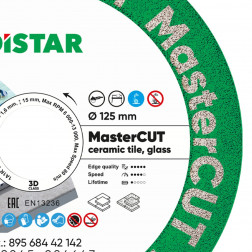
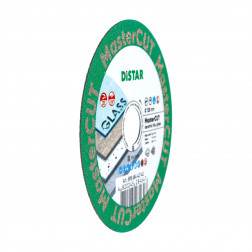
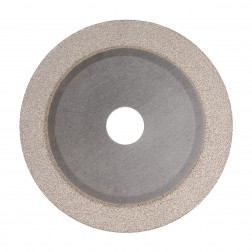
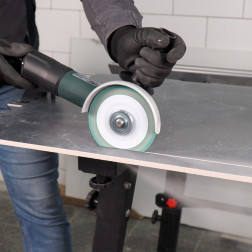


When the question arises of how to cut tiles correctly and accurately before laying, it all comes down to choosing a good tile cutting blade. Some professionals prefer wet processing of tiles with electric tile saws, while others choose an angle grinder and 125 mm tile blades that work dry. On store shelves you can find many 125 mm tile cutting blades of various designs and appearance, which is why it is so important to approach the choice of the right blade responsibly.
Advantages of a 125 mm diamond tile blade
For many people, dry tile processing is associated with uneven cuts and large chips on the edges, but most modern 125 mm tile blades can make both straight and finish cuts. As a result, a 125 mm tile cutting blade for dry processing can completely replace wet cutting of ceramic tiles. What's more, it has a number of additional advantages.
Low price
The price of a blade for ceramic tiles and porcelain stoneware depends on its size. Producing a 125 mm blade requires much less material than a 200 or 250 mm blade designed for tile saws. Moreover, an angle grinder is also much cheaper than an electric tile saw.
Versatile equipment
A 125 mm angle grinder is suitable for many tile processing tasks:
- Cutting at 45° and 90°
- Grinding edges and rims
- Drilling and enlarging holes
- Polishing
Tile processing quality
Diamond tool manufacturers are constantly improving 125 mm ceramic blades so that their cutting quality is not inferior to 200 and 250 mm blades designed for wet processing. Today you can easily find a 125 mm tile blade that provides a cut with minimal chipping, comparable to wet processing, and allows perfectly straight cuts. In addition to finishing blades, you can also choose special 125 mm tile cutting blades for 45° cuts.
Availability of useful tile processing accessories
When processing tiles, you may encounter various problems: it is difficult to keep the blade perfectly perpendicular to the material, it takes skill to make a perfectly straight cut, grinding at 45° requires a lot of effort, and there is a lot of dust. However, there are many accessories for 125 mm grinders that let you work cleanly, easily and quickly.
Which blade parameters should you pay attention to?
Tile processing involves several basic tasks that determine which blade will be most suitable: rough cutting, finish cutting and cutting at 45°. You need to know which blade parameters matter for each task.
Blade thickness
A diamond blade has two main thicknesses: the diamond rim and the body. The diamond rim is always thicker than the metal body. This prevents the steel body from touching the tile during cutting, which could cause unwanted chipping, especially on glazed tiles. 125 mm tile blades can have a body thickness of 0.5 to 1.5 mm and a diamond rim thickness of 0.8 to 2 mm. Thin blades are useful for cutting various rectangular openings and provide a very clean and delicate cut. Blades with a thicker body are perfect for 45° cuts.
Type of diamond rim
Among 125 mm tile blades you can find models with a smooth, even diamond rim or with various types of profiling (corrugation). A smooth, even rim is designed for clean 90° cuts. A profiled diamond rim is needed when working with thicker porcelain stoneware or for 45° cuts.
Diamond rim height
The standard diamond rim height of a 125 mm tile cutting blade is 10 mm. In recent years, blades with a 25 mm diamond rim have appeared, which perform excellently in 45° cuts.
Diamond size
Synthetic diamonds, the cutting element of 125 mm tile blades, can vary significantly in size. Smaller diamonds are used in blades for clean processing, while larger ones are used in blades for rough cutting or 45° cuts. The finer the diamond, the lower the cutting speed, while blades with larger diamonds offer higher performance. Diamond size is usually not stated in the specifications and can only be assessed visually.
Where can you buy high-quality 125 mm tile blades?
As ceramic tiles grow in popularity, so does the demand for diamond blades. On DIY store shelves you can find a huge selection of 125 mm tile blades from various brands, and such variety makes it difficult to choose truly high-quality tools. Distar has been on the diamond tool market for many years and keeps impressing tiling professionals not only with high quality but also with a wide range of products for all kinds of tiling work:
- Blades for finish and rough cuts
- Blades for 45° cuts
- Blades for widening grout joints
- Tile drill bits
- Finger bits for enlarging holes
- Tile grinding and polishing discs
- Accessories for 45° and 90° cutting, as well as for grinding and polishing tiles
Such a wide range combined with European product quality allows professionals to buy all the necessary equipment and consumables for tile processing in one place, which saves a lot of time. You don't even need to look for a store with Distar products – Distar 125 mm tile blades can be selected and purchased on the company's website, which is not only an online store but also a real encyclopedia of knowledge about working with diamond tools.
Frequently Asked Questions
Can a 125 mm blade be used to cut thick tiles?
Diamond blades can process porcelain stoneware of any thickness, but blade selection for thicker tiles needs the right approach. When cutting thick porcelain stoneware, a 125 tile cutting blade is under heavy load and heats up, so you should choose a blade that cools well and withstands loads. The best solution is a thickened blade and one with a profiled (corrugated) diamond segment.
Is the 125 mm blade suitable for wet cutting?
Most 125 tile cutting blades are designed for dry cutting with angle grinders, but there are also models for wet cutting with special tile cutters. To avoid mistakes, check the pictograms on the blade body.