Core drills 130 mm
87 models


Sort:
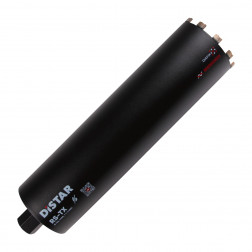
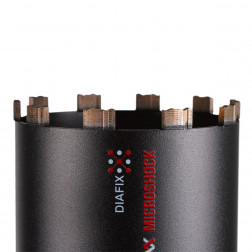
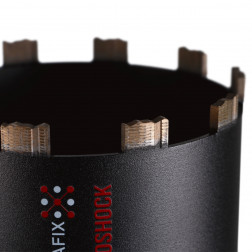


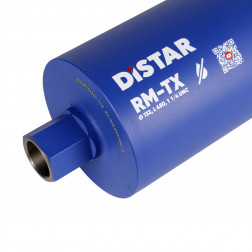

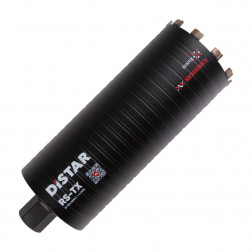
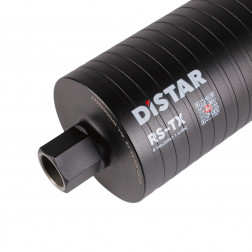
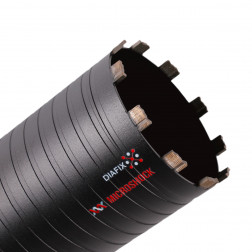
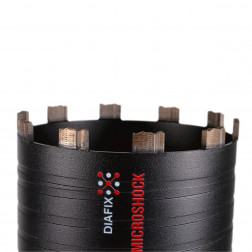
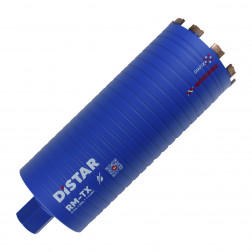
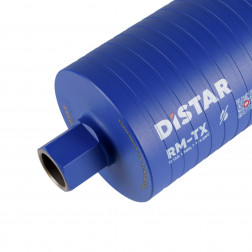
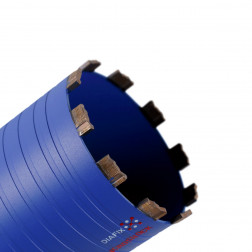
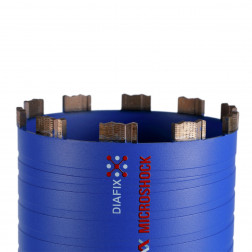
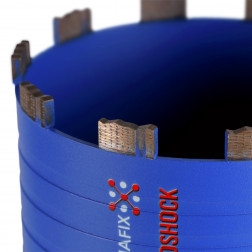
Special diamond core bits are used for drilling holes in hard concrete, brick, foam concrete blocks, and other building materials. One of the most popular sizes of such core bits is the 130mm core bit, as it allows you to carry out the following work:
- Installing extraction systems
- Installing heat recovery units
- Routing sewage pipes
- Installing ventilation systems
- Creating and enlarging openings
- Dismantling large structural elements
A 130mm diamond core bit is used both on handheld diamond drilling machines and on stand-mounted rigs. When choosing a 130mm core bit, it is important to understand its design features, the drilling speed for a given material, and the need to cool the bit during operation. In this article, we will take a detailed look at concrete core bits, their technical parameters, and how to choose them.
Design of a Diamond Core Bit for Concrete
A diamond core bit consists of several elements:
- Connection
- Barrel
- Diamond segments
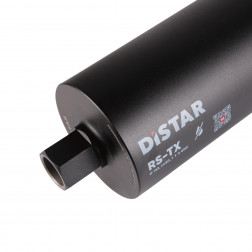
The connection of the core bit determines what type of equipment it can be mounted on. Almost all 130mm core bits are produced with a 1 1/4 UNC connection, which fits most drilling machine models. If your drill has a different connection, you can use various adapters.
The barrel of a 130mm diamond core bit is made of various grades of steel. It is important that the barrel is balanced, since imbalance can cause strong vibration during cutting. The barrels of 130mm core bits are 300 and 450 mm long, but longer barrels for deep holes are also available. If the barrel length is not enough to make the hole, you can use special extensions.
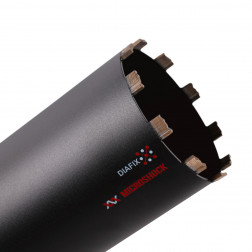
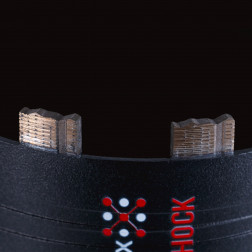
Diamond segments are made from various metal powders and synthetic diamonds. By using different components, diamond tool manufacturers create segments with specific advantages in terms of speed or durability.
Drilling Speed
The drilling speed of various building materials depends on their hardness, abrasiveness, the presence of metal, and the equipment used. Hardness and abrasiveness are inversely related: the higher the hardness, the lower the abrasiveness, and vice versa. In drilling, hardness is the material's ability to resist drilling, while abrasiveness is the material's ability to wear down the diamond segment.
Abrasive materials include brick, foam concrete blocks, aerated concrete, and green non-reinforced concrete. Such materials are easy to drill on any equipment that can take a 130mm core bit. Some minor difficulties may arise when drilling hard or reinforced concrete. Such material is best processed with a stand-mounted diamond drilling machine or a handheld diamond drilling machine with micro-impact.
Cooling the Core Bit During Operation
When choosing a 130mm diamond core bit, take into account the manufacturer's recommendations for dry or wet operation. Under no circumstances should a core bit designed for wet drilling be used without water supply to the cutting zone, as its segments will overheat and lose their cutting properties. Likewise, using a dry core bit with water is highly inadvisable.
Drilling with Micro-Impact
Most modern handheld diamond drilling machines are equipped with a micro-impact function. As you know, drilling with a diamond tool in heavy impact mode (for example, on a rotary hammer) is prohibited and can cause the segments to break off. Drills with micro-impact have a very small impact amplitude and do not damage the diamond tool. However, on such drills it is better to use special micro-impact diamond core bits, as their composition is optimized for this equipment.
How to Drill Correctly with a Diamond Drilling Machine?
When using a 130mm concrete core bit on a handheld drill or when drilling from a stand, follow these rules:
- When starting a hole by hand, use a special centering device.
- When drilling from a stand, fix it securely to the surface.
- The drill speed should not exceed the recommended speed of the core bit.
- When wet drilling, don't skimp on water; there should be enough for cooling.
- When dry drilling, it is recommended to use a vacuum cleaner.
- Don't press too hard on the equipment and try to maintain its speed.
- When drilling through rebar, reduce the speed and switch off micro-impact.
- After each hole, before starting a new one, make sure you have removed all drilled material from the barrel of the core bit.
Why Buy Distar Core Bits?
Distar manufactures both 130mm core bits for wet and dry drilling and various components for them: diamond segments for retipping, different adapters, and extensions. All of these products undergo constant quality control for the most important drilling parameters — no imbalance, strength of segment attachment to the barrel, and axial runout. A balanced tool with no axial runout lets you work quickly without unnecessary strain on the operator or equipment.
In addition to high product quality, Distar offers a modern website with convenient navigation, a wide range of products, and useful information about diamond tools. On the website, you can not only check the price of the tool you need, but also order it and arrange delivery to any city.
Frequently Asked Questions
What materials can be drilled with a 130 mm core bit?
Diamond core bits are suitable for processing all kinds of building materials: foam concrete, aerated concrete, cinder blocks, brick, asphalt, fresh concrete and strong reinforced concrete.
What is the service life of a 130 mm diamond core bit?
Depending on the material being processed, a 130 mm diamond core bit can drill from several linear metres to more than 10 m. Besides the material, the type of segment also affects service life. Softer segments drill with lower durability but at higher speed.
Is a cooling system needed when working with a 130 mm core bit?
There are 130 mm diamond core bits both for dry work and for use with coolant supply. When choosing a core bit, you can read about its properties on the manufacturer's website or look at the pictograms on the core bit body.