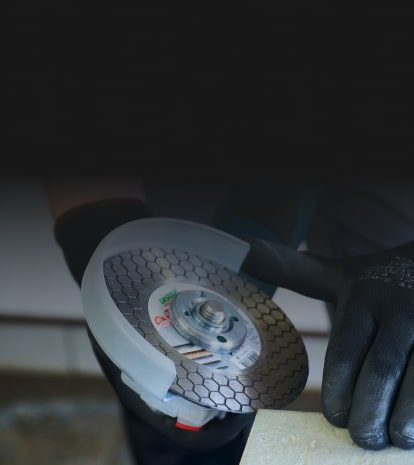
Diamond disc for grinding concrete
29 models


Sort:
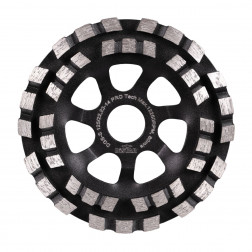
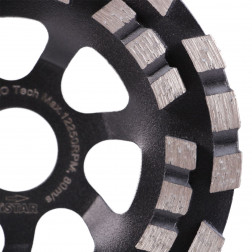
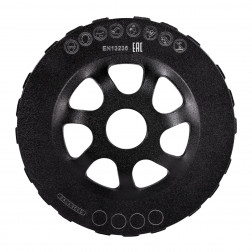
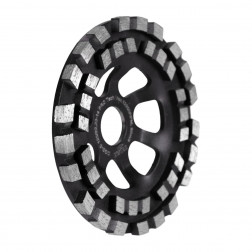
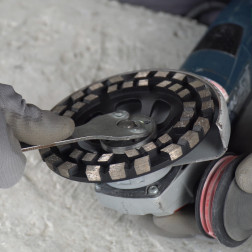
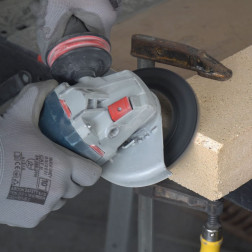
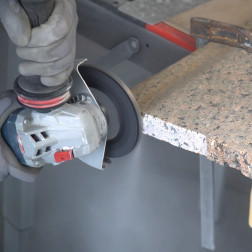
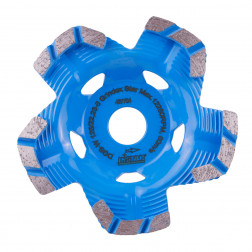

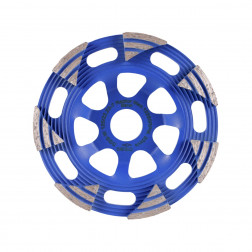
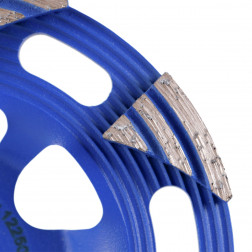
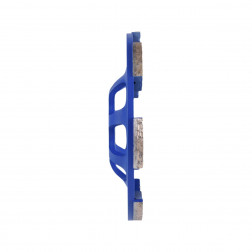
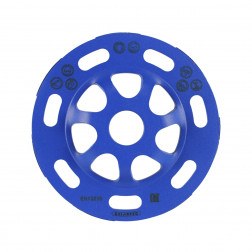
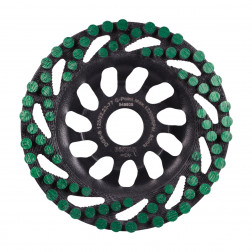
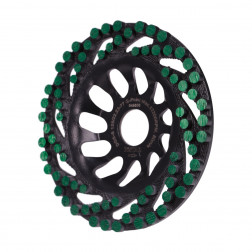
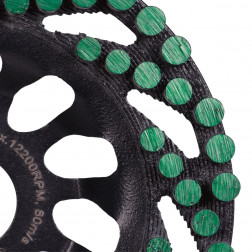
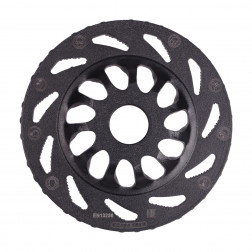
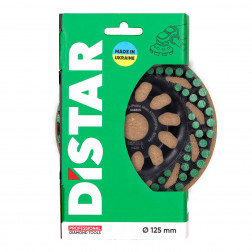
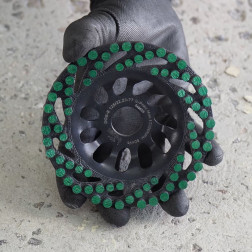
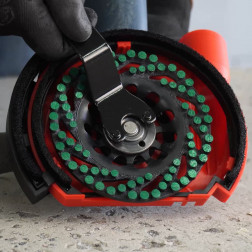
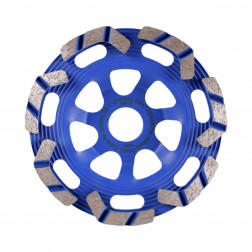
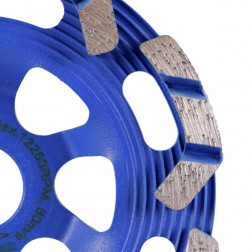
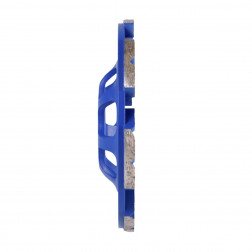
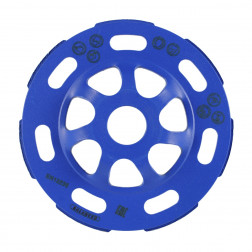
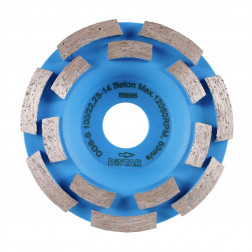
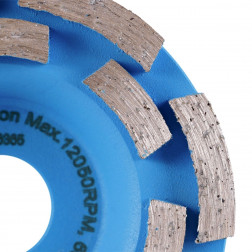
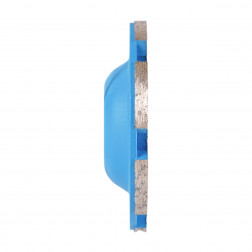
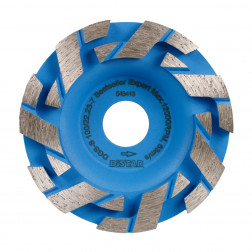
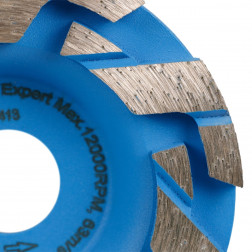
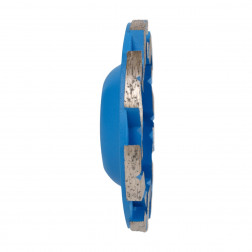
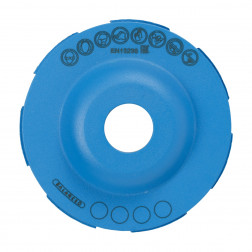
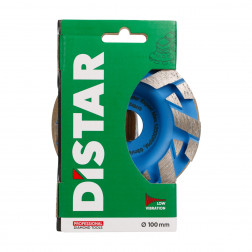
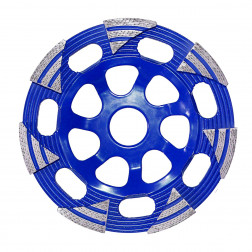
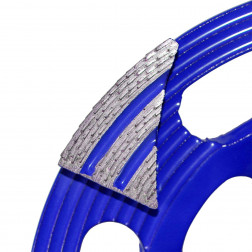
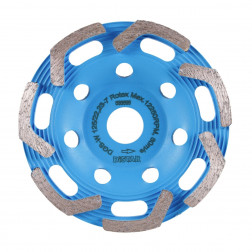
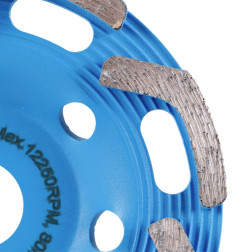
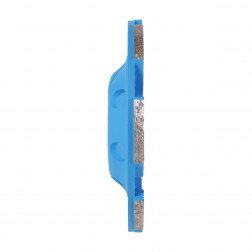
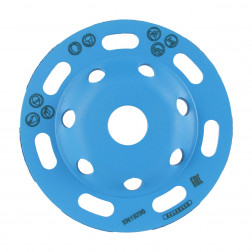
After pouring a screed or removing tiles, professionals often need to grind the floor before further flooring work. Grinding screed or concrete and adhesive residue from old tiles is most commonly done with an angle grinder and a diamond disc. In this article, we will describe in detail such a diamond tool as the cup grinding disc for concrete, its types, selection features, and applications.
Concrete grinding disc: Types and functions
Each cup wheel processes material using special synthetic diamonds embedded in metal segments. Depending on the size of the diamonds and the shape of the segment, several basic types of diamond grinding discs for concrete can be distinguished.
Rough grinding cup wheel
Such cup wheels are used where surface quality is not critical and even deep scratches are not a problem. The main objective of tools such as the grinding disc for concrete is high processing speed and maximum material removal within a given time. One of the most efficient cup wheels from Distar is the Raptor concrete grinding disc. It is capable of turning approximately 300–350 grams of M400-class concrete into dust per minute. This high performance makes it a leader in the category of discs for fast and rough concrete grinding. For rough grinding, adequate cooling during the process is also important.
Fine grinding cup wheel
Fine processing with a cup grinding wheel for concrete involves bringing the surface to a near-polished state with minimal scratching. In such tasks, processing speed is no longer the priority — instead, achieving the flattest and smoothest possible surface is key, which is handled excellently by cup wheels with a large number of diamond segments. A concrete polishing disc is ideal for this type of work, delivering an even, smooth surface and a professional finish. This category includes the Distar Bestseller Expert and Beton. This concrete grinding disc features a high number of segments, ensuring a maximally even surface after grinding and minimal scratching. After processing with such cup wheels, the floor will look nearly polished, and the grinding result will be perfect. Precision grinding is the key to a professional finish.
Specialised cup wheels
Professionals may sometimes face tasks that a standard concrete grinding disc cannot handle — such as grinding polymer floor coatings or wall lacquer coatings. For such purposes, Distar has developed a specialised cup wheel — Green Point. It offers high performance in processing both polymers and lacquer coatings, as well as concrete itself. Thanks to its versatility, it is an excellent choice for a wide range of grinding tasks.
Concrete grinding discs: selection criteria
Simply grabbing the first available or most eye-catching concrete grinding disc and starting work is a very poor approach. Choosing a cup wheel should be done more carefully, taking into account at least the following parameters:
- Scope of work
- Material being processed
- Weight of the cup wheel
Scope of work
To select the optimal cup wheel, the scope of work must be considered. The faster a cup wheel processes material, the shorter its service life — so for large grinding areas it is better to choose not the fastest disc, but one with maximum longevity. Service life is directly influenced by the number and size of segments. It is also worth paying attention to appropriate concrete grinding discs which, combined with the right cup wheel, will ensure efficiency and durability throughout the process. Grinding large surfaces requires experience and the right tools.
For smaller surfaces, a cup wheel with fewer segments can be chosen to complete the work faster. In every case, precise grinding improves the quality of the final result. The right choice means fewer errors during grinding.
Material being processed
In construction, many different types of concrete and other building materials varying in hardness may need to be processed with a concrete grinding disc. For example, fresh screed is highly abrasive and significantly reduces the service life of diamond segments. In contrast, hard and aged concrete is less abrasive but harder, thereby increasing the service life of the cup grinding disc for concrete. Which materials are abrasive and which are not?
- High abrasivity materials: foam blocks, aerated concrete, fresh concrete, screed, plaster, asphalt, and silicate brick.
- Medium abrasivity materials: paving stones, paving slabs, concrete up to M400 class, hard brick.
- Low abrasivity materials: all types of natural stone, hydraulic concrete, and concrete of M400 class and above.
The higher the abrasivity of the material, the shorter the service life but the higher the processing speed, and vice versa. In this context, the cup wheel must be selected accordingly.
Weight of the cup wheel
Sometimes grinding is required not only on floors but also on walls, ceilings, or in hard-to-reach areas with arms extended. The weight of diamond cup wheels can range from 300 to 600+ grams, which significantly affects operator fatigue when grinding non-floor surfaces. Additionally, the weight of the concrete grinding disc strongly influences the so-called gyroscopic effect, which arises from the high rotational speed of the angle grinder. This can negatively affect the service life of your power tool. When processing walls and ceilings, always try to choose the lightest possible cup grinding disc for concrete — this eases the grinding process and reduces operator fatigue.
Why choose a Distar cup wheel?
Over many years of producing concrete grinding discs, Distar has managed to identify the most common pain points professionals encounter during work and create cup wheels that address them. A wide range of cup wheels allows matching a tool to any task and material. This also guarantees grinding quality regardless of conditions.
Strict production quality control allows Distar to deliver only high-quality products to store shelves. All cup wheels undergo multiple quality checks:
-
Checking the hardness of diamond segments
-
Checking for imbalance and balancing if the imbalance exceeds 1 gram
-
Checking segments for detachment at speeds above 20,000 RPM
-
Weld inspection of segments for bending resistance using a torque wrench
This quality control makes work maximally comfortable, efficient, and safe, while also extending the service life of your power tool. If you are looking for reliable surface processing solutions, a concrete grinding disc is an excellent choice that performs equally well for professional and domestic use. In every situation, grinding precision matters.
Additionally, Distar has a very convenient website where you can order delivery to any city. By purchasing Distar cup wheels, you choose a wide range of diamond tools at an affordable price.
Why choose a Distar cup wheel
Distar offers a wide range of diamond tools: concrete grinding discs, concrete grinding wheels, diamond discs for angle grinders, and more. Strict quality control guarantees durability and safe operation.
FAQ
What is a diamond disc for concrete grinding?
It is a specialised diamond tool, most commonly used with angle grinders for levelling floors, walls, and ceilings or for other preparatory work. A diamond disc for concrete grinding, thanks to diamond segments attached to a metal body, enables precise processing of surfaces made from various building materials such as concrete, stone, and mortar.
What are the most popular diamond disc sizes?
Professionals most commonly use diamond concrete grinding discs with a diameter of 125 mm. Lighter discs with diameters of 115 mm and 100 mm are also popular.
Can one disc be used for different types of concrete?
It is better to have several different discs — both for abrasive concrete and for durable, less abrasive material. A diamond concrete grinding disc will perform excellently in both cases, enabling work to be completed as quickly and economically as possible. This makes grinding not only effective but also long-lasting.
What is a diamond disc for an angle grinder?
A specialised tool for precise grinding of concrete, screed, or stone, mounted on an angle grinder.