
How to Drill Holes for Electrical Wiring? Choosing the Right Core Drill Bit for Concrete and Brick
Making a hole for an electrical cable may seem like a simple job. In practice, a lot depends on the type of wall, the diameter of the hole, its depth, and the right choice of tool.
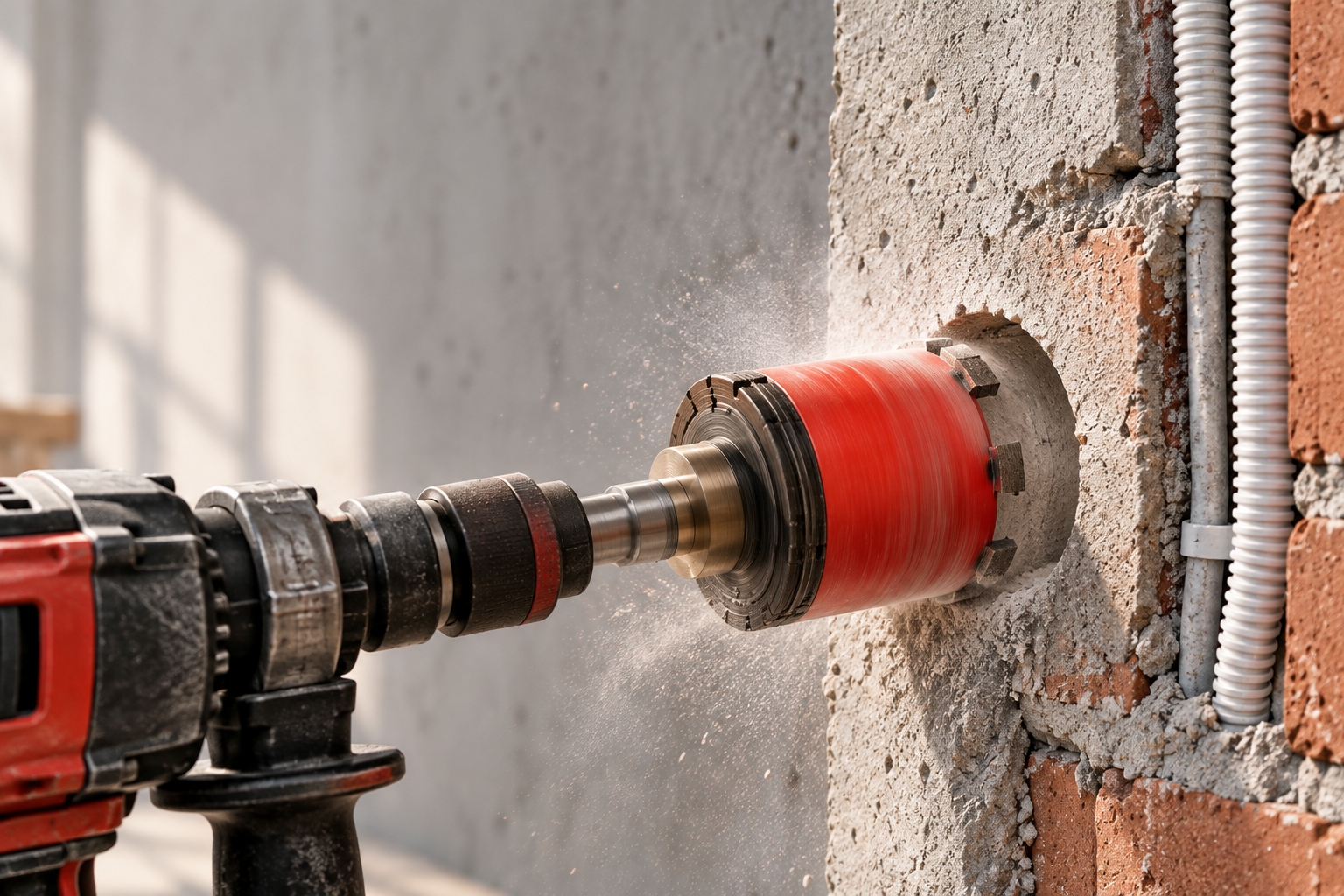
Working in brick is different from working in concrete, and different again from working in reinforced concrete. Using the wrong core bit can mean slower drilling, faster tool wear, damage to the material, or unnecessary strain on the machine.
That's why, before you start, it's worth answering a few basic questions:
- What material am I drilling into?
- What diameter should the hole be?
- How deep should the hole be?
- What machine will I be using?
- Do I need cooling?
- Could there be rebar or existing utilities in the wall?
In this guide, we show you how to choose a core bit for concrete and brick and how to properly plan drilling holes for electrical installations.
Which Core Bit to Choose for Drilling Cable Holes?
The most important criterion when choosing a core bit is the material in which the hole will be made.
In typical installation work, you may encounter, among others:
- brick,
- ceramic hollow blocks,
- non-reinforced concrete,
- reinforced concrete,
- other mineral materials.
For hard materials, diamond core bits work very well, as they make holes by grinding the material rather than breaking it with classic hammer action.
However, when choosing a tool, always be guided by its specific intended use and the manufacturer's recommendations.
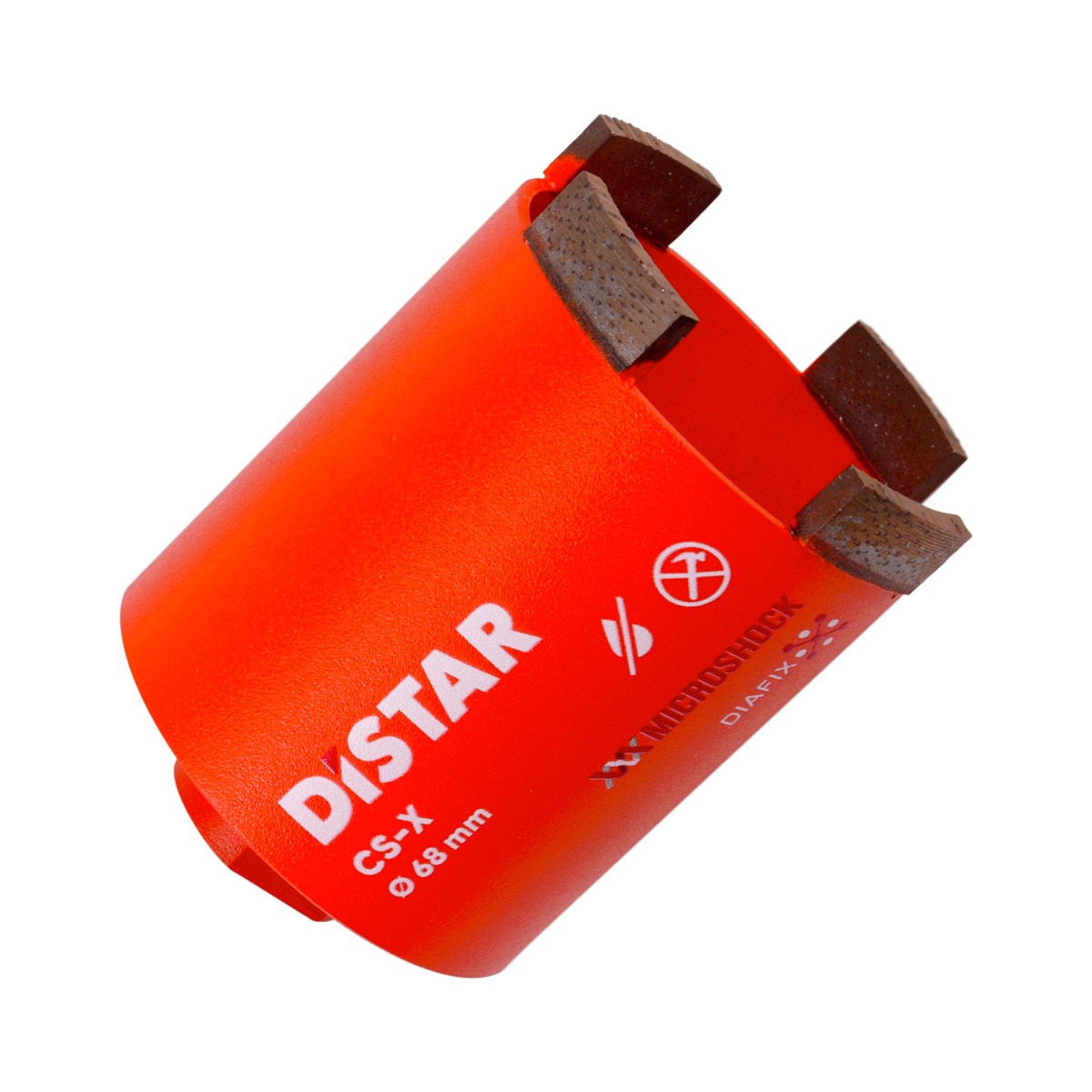
Diamond core bit DDS-W 068x70xM16 CS-X
Drilling in Brick vs. Drilling in Concrete – What's the Difference?
At first glance, both materials are simply “a wall”. From the tool's point of view, however, the difference can be very large.
Brick
Brick is usually easier to drill than concrete. For larger holes, the ability to remove material quickly and in a controlled way is important.
Concrete
Concrete is a much more demanding material. Its hardness, aggregate, and structure affect the drilling rate and tool wear.
Reinforced Concrete
Here another factor comes into play – steel reinforcement.
Drilling in reinforced concrete requires a tool and machine suitable for this application. Not every core bit designed for non-reinforced concrete will be suitable for cutting through rebar.
The conclusion is simple: don't choose a core bit based on hole diameter alone. Determine the material first.
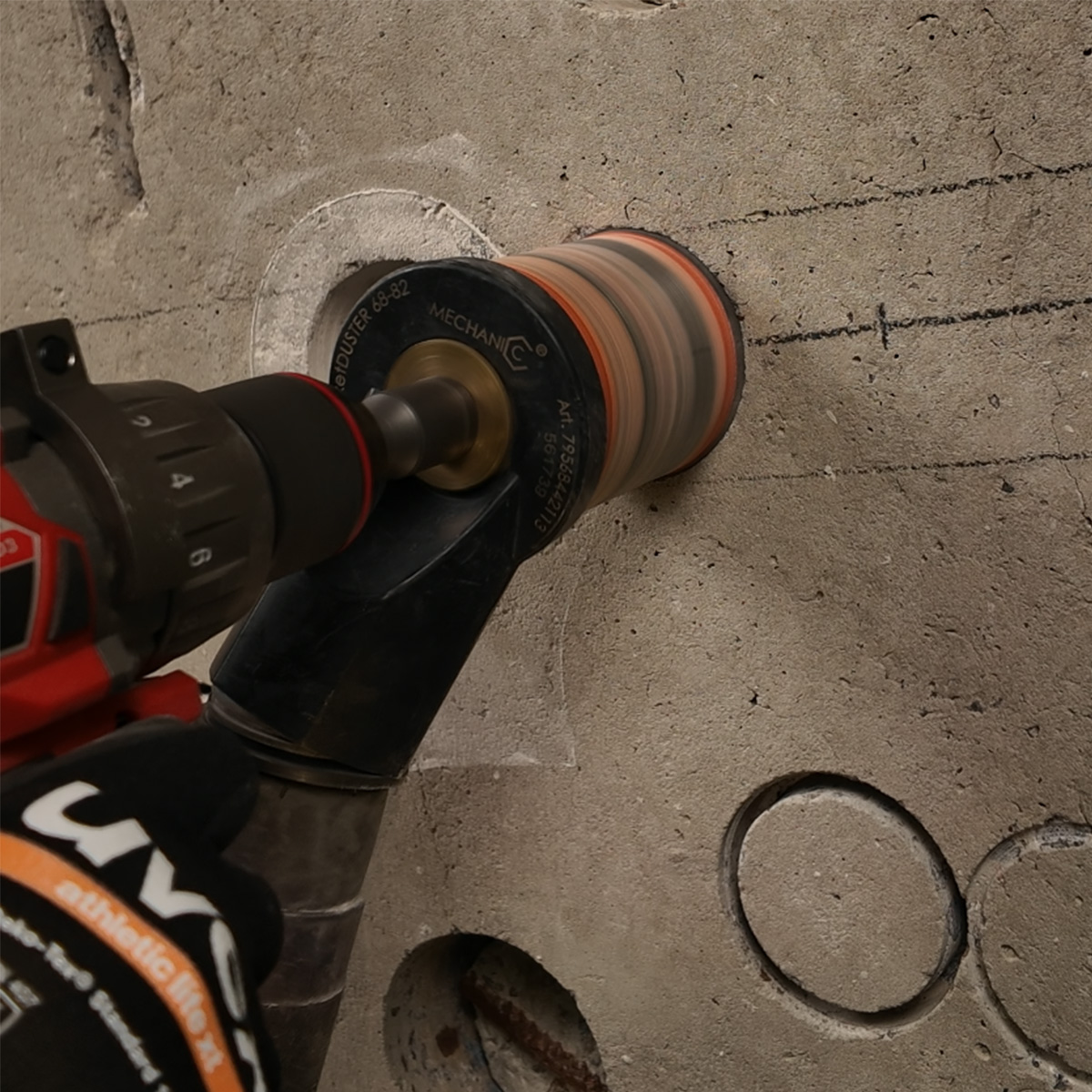
Why Use a Diamond Core Bit for Large Holes?
For small holes, standard drill bits can often be used. The situation changes when a larger hole is needed.
This applies, for example, to holes made for:
- cable penetrations,
- boxes and installation components,
- utility passages,
- cables routed through walls,
- electrical installations,
- telecommunications installations.
With larger diameters, classic hammer drilling can mean a lot of impacts and breaking up of material.
A diamond core bit works differently – it removes material only around the perimeter of the hole.
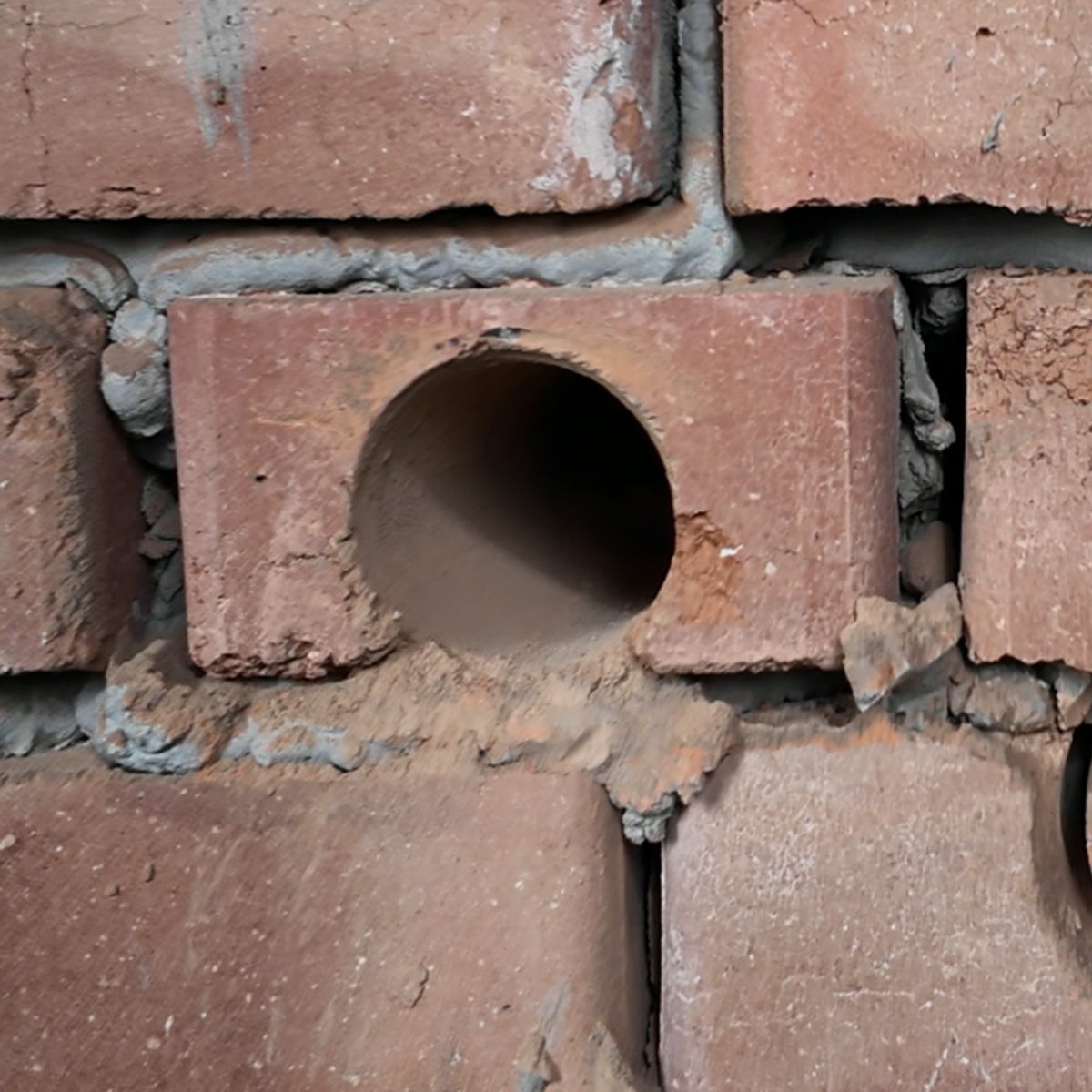
As a result, you get a precise hole without having to break up the entire area around it.
How to Choose the Core Bit Diameter for an Electrical Cable?
The core bit diameter should be based on the actual requirements of the installation.
Before starting work, determine:
cable or bundle diameter → required clearance → hole diameter → installation routing method.
There's no point in automatically choosing the largest available diameter.
A hole that is too large can mean:
- more material to remove,
- longer working time,
- greater tool wear,
- the need to additionally fill the penetration.
On the other hand, a hole that is too small can make it difficult to route the cable properly.
So the diameter should be matched to the specific installation and how it will be carried out.
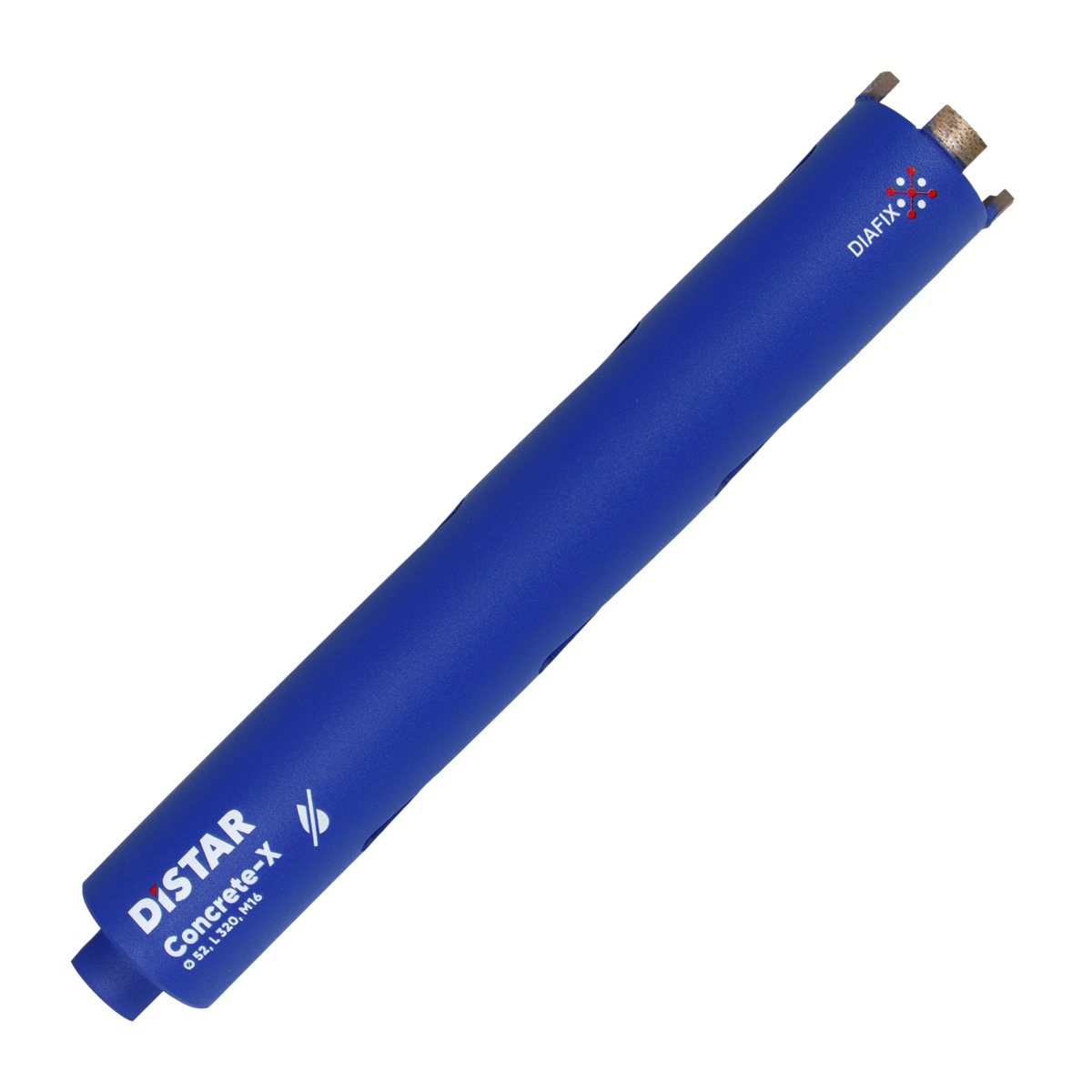
Diamond core bit DDS-W 52x320xM16 Concrete X
How to Drill a Hole for an Electrical Cable Step by Step?
1. Check the Drilling Location
Before starting work, make sure there are no existing cables, pipes, or other utilities running where the hole is planned.
This is especially important during renovation work, when full documentation of the existing installation is not always available.
2. Determine the Wall Material
Find out whether you are drilling into:
- brick,
- hollow block,
- non-reinforced concrete,
- reinforced concrete.
The choice of core bit and machine depends on this.
3. Choose the Diameter
Determine the required penetration diameter.
For larger holes, it's best to use a core bit designed specifically for that diameter range.
4. Check the Machine and Connection
The core bit must be compatible with the machine you are using.
Factors that matter include:
- shank type,
- mounting method,
- available power,
- rotational speed,
- the possibility of using appropriate cooling.
5. Start Drilling Steadily
The start of the work is especially important with large diameters.
The tool should be properly stabilized, and the operator should control its position.
Don't try to speed up drilling by applying excessive pressure.
6. Monitor the Tool
While drilling, watch:
- the penetration rate,
- the tool temperature,
- the machine's behaviour,
- the amount of material being removed,
- any unusual vibration.
If the operating parameters clearly deviate from normal, stop work and check the cause.
Which Core Bit to Choose for Concrete?
With concrete, the key is to determine whether it is non-reinforced or reinforced.
For non-reinforced concrete, you can use solutions designed for this type of material.
For reinforced concrete, use a tool approved for work in such conditions.
When choosing, pay attention to:
- diameter range,
- material type,
- suitability for reinforced concrete,
- cooling method,
- shank type,
- machine compatibility,
- required hole depth.
Not every diamond core bit is universal.
This is one of the most common reasons for a tool not working properly.
Which Core Bit for Brick?
Brick is a material in which contractors often make holes for electrical, plumbing, or telecommunications installations.
For larger diameters, it's worth looking at solutions designed specifically for masonry materials.
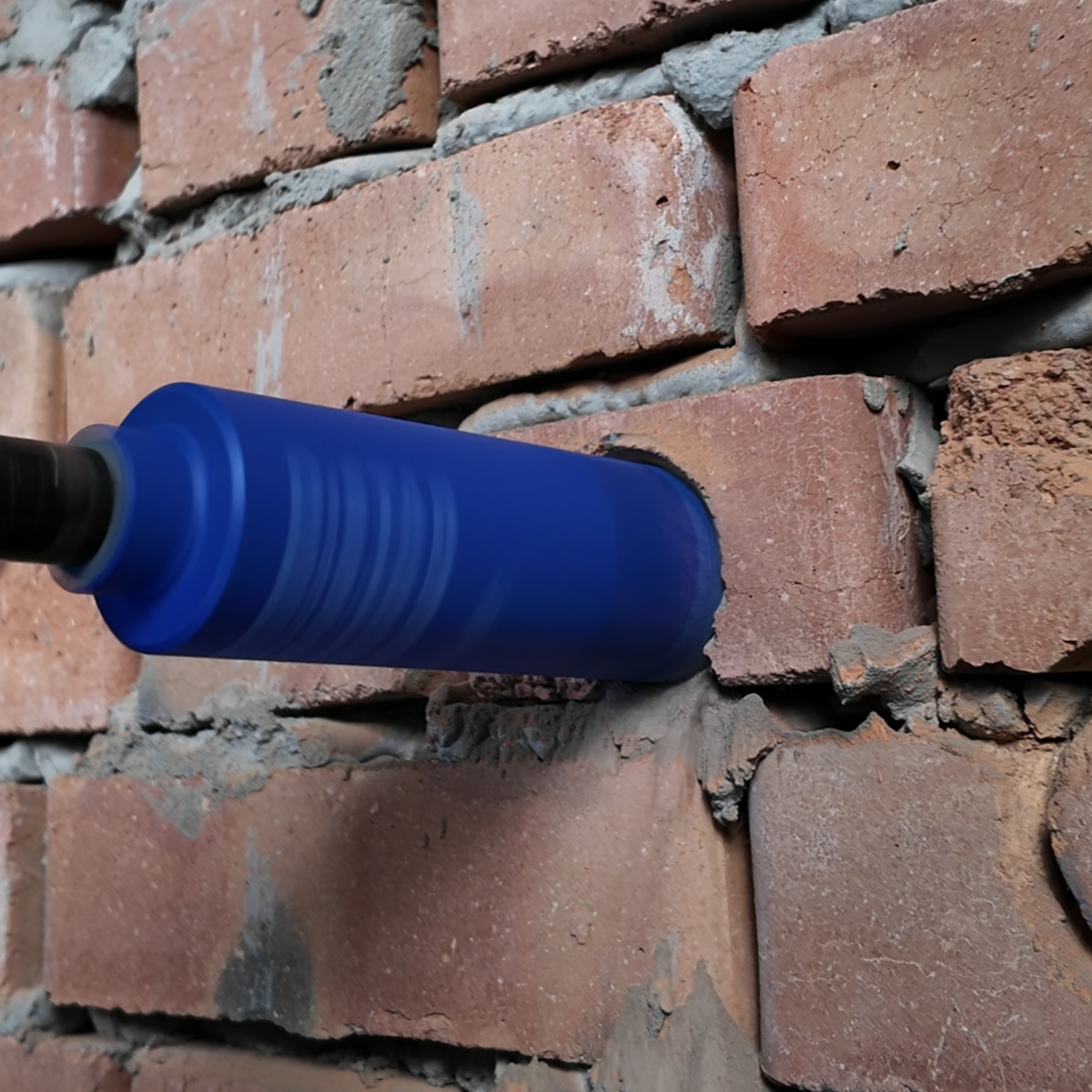
The Distar Discovery system offers diamond core bits designed for, among others:
- brick,
- non-reinforced concrete,
- reinforced concrete.
The system covers a diameter range of 32–202 mm, so it can also be used for larger installation holes.
Discovery – When Is It Useful for Electrical Work?
Making electrical penetrations doesn't always require a large drilling machine.
This is exactly one of the problems the Discovery system solves.
Discovery core bits have a compact design and a base length of 150 mm. With the appropriate adapters, they can be configured to work with different machines.
Depending on the application, the system can work with:
- cordless drivers,
- drills,
- rotary hammers,
- diamond drilling machines.
Extensions of 200 and 300 mm are also available, allowing deeper holes to be made.
This solution may be especially interesting for installation crews who drill in various locations and want to reduce the amount of heavy equipment they have to transport to the job site.
Why Can a Compact Core Bit Be More Convenient on Site?
During installation work, contractors often operate in confined spaces.
They may be working:
- in an apartment,
- in a stairwell,
- in a cramped room,
- around already installed utilities,
- in a place that is hard to reach with a large machine.
In such conditions, not only performance matters, but also the weight and size of the set.
A shorter design can make the tool easier to handle and give more control when starting the hole.
How to Avoid Damaging a Cable While Drilling?
The hole itself is only part of the task.
Before starting work, first of all check that there is no existing installation where the hole is planned.
Take particular care during renovations of existing buildings.
It's worth:
- analysing the routing of existing installations,
- using the available documentation,
- using suitable utility detectors, if required,
- not drilling “blind”,
- keeping appropriate distances from existing cables and pipes.
Even the best core bit cannot replace a proper assessment of the drilling location.
The Most Common Mistakes When Making Cable Holes
Mistake 1: Choosing a Core Bit by Diameter Only
This is one of the basic mistakes.
The same diameter does not mean the tool will be suitable for brick, concrete, and reinforced concrete.
Mistake 2: Applying Too Much Pressure
Pressing harder doesn't always mean faster drilling.
It can, however, increase the load on the machine and the tool.
Mistake 3: Ignoring Machine Parameters
The core bit should work with a machine whose parameters match the tool's requirements.
Mistake 4: Not Checking the Drilling Location
In an existing building, never assume there is “definitely nothing” in the wall.
Mistake 5: Choosing a Tool Without Considering Depth
If a deep hole is needed, the core bit diameter alone is not enough.
You also need to plan the right length of the set.
How to Choose a Core Bit for Concrete and Brick? A Simple Table
|
Working conditions |
What to look for |
|
Brick |
Core bit designed for masonry materials |
|
Non-reinforced concrete |
Core bit designed for concrete |
|
Reinforced concrete |
Tool approved for reinforced concrete + suitable machine |
|
Large hole |
Appropriate diameter and connection |
|
Deep hole |
Option to use an extension |
|
Limited space |
Compact tool and suitable machine |
|
Working without cooling |
Model designed for dry drilling |
What Matters More: Core Bit Diameter or Material?
Material.
The diameter tells us what hole we will get. It does not tell us whether the tool will work properly in a given wall.
That's why the selection should follow this order:
1. Material. Brick, non-reinforced concrete, reinforced concrete.
2. Diameter. What hole is required?
3. Depth. How deep should the hole be?
4. Machine. What equipment will be used for the work?
5. Working method. Dry or with cooling – according to the specification of the particular tool.
Only after determining these parameters can you properly choose a core bit.
Core Bits for Concrete and Brick – FAQ
Which core bit to use for drilling brick?
For brick, choose a core bit designed for masonry materials. For larger installation holes, a suitable diamond core bit matched to the diameter and depth of the hole can be a good solution.
Which core bit to use for concrete?
For concrete, use a tool designed for this material. When choosing, you also need to determine whether the concrete is reinforced.
Can a diamond core bit be used to drill reinforced concrete?
Yes, but only with a tool and configuration designed for this application and a suitable machine.
What core bit diameter should I choose for an electrical cable?
The diameter should be matched to the specific cable or bundle, the routing method, and the required installation tolerance. There is no single universal diameter suitable for all cables.
Can I drill without cooling?
Some core bits are designed to work without cooling. One example is the Discovery system, whose relevant models work without cooling. However, always check the requirements of the specific model.
Do I always need a drilling machine to make a large hole?
Not always. Depending on the material, hole diameter, and tool used, other machines can also be used. The Discovery system was designed, among other things, for use with drills, rotary hammers, and cordless drivers in suitable applications.
Summary – How to Choose a Core Bit for a Cable Hole?
A good hole starts not with switching on the machine, but with choosing the right tool.
Remember a simple rule:
- MATERIAL → DIAMETER → DEPTH → MACHINE → WORKING METHOD
- If you are drilling in brick, you need a tool suitable for masonry materials.
- If you are working in concrete, check whether it is reinforced.
- If you are making a large hole, pay attention not only to the diameter but also to the tool's weight, connection type, and the machine's capabilities.
- And if the hole is deep, check whether a suitable extension can be used.
A properly chosen core bit doesn't just let you make a hole. It lets you do it in a more predictable, repeatable way, suited to real working conditions.
Not Sure Which Core Bit to Choose?
For professional applications, it's best not to choose a tool based on the material name alone.
When contacting a Distar expert, it's worth providing right away: material + hole diameter + depth + the machine you have + number of holes.
This information makes it possible to choose a solution for the specific task much more precisely.
If you drill holes for electrical installations, air conditioning, heat recovery, or other utilities, contact the Distar team. We will help you choose the right tool configuration for your working conditions.


